
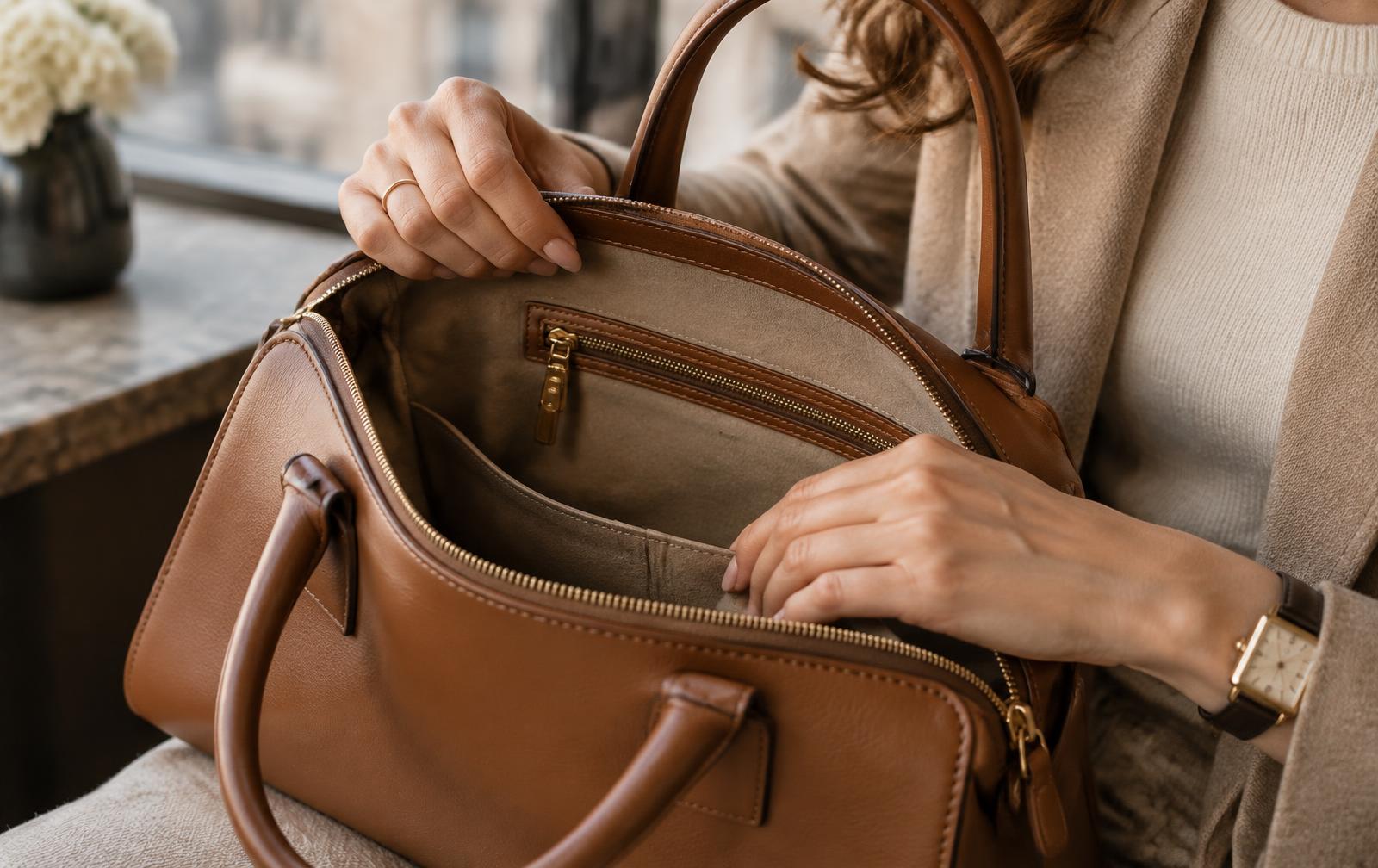
There's a very specific feeling you get when you find the bag. The right model, the right colour, a price that makes you sit up a bit. And then, about four seconds later, the second feeling: hang on, is this real?
You're right to ask. Counterfeiting isn't a niche problem. According to the OECD and the EU Intellectual Property Office, fakes made up 4.7% of everything the EU imported in 2021, worth around US$117 billion, with clothing, footwear and leather goods among the most targeted categories. And most of it now arrives the same way your second-hand orders do: in small parcels, through the post.
The short answer: check the price against comparable second-hand listings, check the seller's history, and ask for close-ups of the stamps, lining and hardware before you pay. No single detail proves a bag is real.
On the buyer side, the EUIPO's own research found that 39% of Europeans have wondered whether something they bought was genuine or fake. Knowing how to spot a fake designer bag isn't paranoia. It's just part of buying pre-loved designer now.
Start with the price, because it's free
Before you zoom in on a single stitch, look at the number. Designer bags hold their value well second hand. Vinted's own trend data has Louis Vuitton, Chanel and Gucci as the top-selling luxury names across Europe, with Loewe the brand Spanish shoppers go for first. That demand is exactly why a genuine Neverfull doesn't need to be listed at a fraction of its usual resale price to sell.
So compare. Search the same model across two or three apps and see where the genuine listings cluster. The UK Intellectual Property Office's guidance on shopping second hand puts it simply: an item priced well below comparable second-hand listings deserves a much closer look.
The price is the first authenticity check, and it costs you nothing.
Then look at the seller, not just the bag
Alastair Gray, Director of Anticounterfeiting at the International Trademark Association, gave Marie Claire UK a tell I now can't unsee: check whether the seller has multiples of the same item in different sizes or colours. Someone clearing out their wardrobe doesn't tend to have so many repeats. He also flags listing language like "factory overrun" or "mirror quality". Neither of those means real.
A long, consistent sales history with detailed reviews is a good sign. A brand-new profile selling five designer bags in a week is not.
A seller with the same bag in three colours isn't clearing out a wardrobe. They're running a stockroom.
What a real listing usually looks like
| Red flag | What a genuine listing usually looks like |
|---|---|
| Photos lifted from the brand's website or another listing | The seller's own photos, in their own light, from several angles |
| Price far below comparable second-hand listings | Price in line with what that model and condition usually sell for |
| "Mirror quality", "factory overrun", "1:1" | Plain description of model, age, condition and flaws |
| Seller has the same bag in several colours | One bag, often with a reason for selling it |
| Won't send extra photos of labels, stamps or hardware | Happy to send close-ups of the heat stamp, lining, zips and serial or date code |
| Asks you to pay outside the app | Keeps payment inside the app, where buyer protection applies |
Check the details, all of them together
Victoire Boyer-Chammard, an authentication specialist at Vestiaire Collective, makes a point in the same Marie Claire piece that's worth repeating: there's rarely one magic marker. Real authentication looks at materials, construction, typography and hardware together, and it starts with a simpler question. Did this model actually exist in this colour, in this year?
Some brand-specific context helps too. Louis Vuitton began phasing out printed date codes in favour of embedded microchips from March 2021, and those chips aren't something you can scan on your phone. So on a newer piece, a missing date code isn't automatically a red flag. A crisp date code on a bag that supposedly came out in 2023 might be.
Before you pay, ask for:
- The seller's own photos of the heat stamp or logo, the interior label, the lining, the zip pulls and the underside of the hardware.
- Any date code, serial number or authenticity card, plus the original receipt, dust bag or box if they have them (useful, but boxes and cards get faked too, so they support the case rather than prove it).
- A photo of the bag next to something with today's date, or a short video, if the photos look suspiciously polished.
- Measurements, so you can check them against the brand's official dimensions for that model.
Use the verification that already exists
For higher-value pieces, you don't have to be the expert. Vinted's Item Verification service, which runs in Spain as well as most of its other European markets, sends eligible designer items to a verification hub, where the platform's authentication team checks them before they reach you. Eligible listings carry a diamond badge, the buyer pays the service fee at checkout, and if an item fails, it goes back to the seller rather than on to you. eBay's Authenticity Guarantee does a similar job on eligible handbags. On Wallapop, keep payment and shipping inside the app so Wallapop Protect covers you if the item isn't as described.
Vinted is also tightening its counterfeit rules from 5 October 2026. Under its updated European terms, which apply in Spain, sellers flagged for a likely counterfeit will have 48 hours to prove authenticity, and items confirmed as fake can be held for six weeks while the seller challenges the decision, then destroyed. That's good news for buyers, but it's no reason to stop checking.
If you think you've already bought a fake
- Don't confirm the order as received or leave a review until you've inspected it properly.
- Report it in the app straight away. The UK IPO's guidance notes that buyers typically have a 48-hour window after delivery to raise a problem, so don't sit on it.
- Keep everything: the listing screenshots, the messages, the packaging and the bag itself.
- Never agree to "sort it out" off-platform. Once the money leaves the app, so does your protection.
The EUIPO found that 13% of Europeans have knowingly bought a counterfeit in the last year, rising to 26% among 15 to 24-year-olds. If you're reading this, you're not in that group. You just want what you paid for.
Selling a genuine piece?
The same logic runs the other way. A genuine designer bag with its receipt, dust bag and clear photos of the stamps and hardware sells faster and for more, because you've already answered the buyer's first question. I've covered how to get the best resale value for your clothes in more detail, and whether to donate or sell clothes you don't wear if you're deciding whether that bag is worth listing at all. If it is, a real, verifiable item is where an honest price starts.
Quick answers
How can you tell if a designer bag is real? To spot a fake designer bag, check the price against comparable second-hand listings, look at the seller's history, and compare the heat stamp, lining, stitching, hardware and any date code or serial number against the brand's genuine details. As authentication experts point out, no single detail proves a bag is real. It's all the details agreeing with each other.
Does Vinted check if designer items are authentic? Yes, on eligible items. Vinted's Item Verification service, available in Spain and most of its European markets, sends eligible designer items to a verification hub for an expert check before delivery. The buyer pays the service fee, and items that fail are returned to the seller.
What happens to counterfeit items on Vinted? Under Vinted's updated European terms, which apply in Spain from 5 October 2026, sellers flagged for a likely counterfeit have 48 hours to prove the item is authentic. Items confirmed as counterfeit can be held for six weeks while the seller challenges the decision, and then disposed of, recycled or destroyed.
What should I do if I bought a fake bag on Vinted? Don't confirm the order. Report it in the app as soon as it arrives, since buyers typically have a 48-hour window after delivery, keep all screenshots and packaging, and never settle the problem off-platform.
Are "mirror quality" or "factory overrun" bags real? No. Anticounterfeiting experts flag phrases like "mirror quality", "1:1" and "factory overrun" as common signs of a counterfeit listing.