
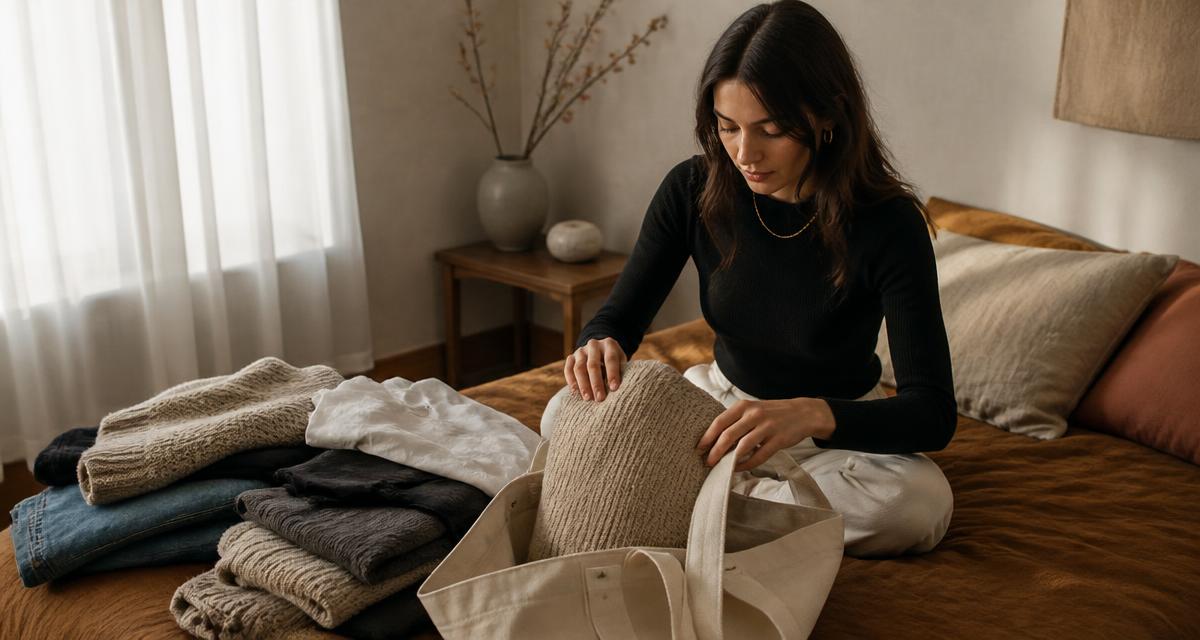
As we near the end of summer, a lot of us are going through our wardrobes to make space for jackets, knitwear and warmer bits. And, inevitably, we will make the pile.
Things we bought and never really wore. Pieces that aren't really our style anymore. Jeans that haven't fitted properly since 2023. That dress we were convinced we'd wear all the time.
A pile of things we need "to get rid of".
But where does it actually go?
You have plenty of options: sell, donate, gift or throw away. And while they might all get clothes out of your wardrobe, they are very different when it comes to what happens next.
This is where circular fashion comes in.
What Is Circular Fashion?
Circular fashion is basically about stopping clothes from following the same old journey: make, buy, wear, bin, repeat.
Instead, the idea is to keep clothing and its materials in use for as long as possible. That means wearing things for longer, repairing them, reselling them, buying second-hand and recycling them when they genuinely can't be used anymore.
And honestly, we need to get better at it.
A 2026 report from Moda re- found that around 87% of used clothing in Spain ends up in landfill, while only around 13% is collected separately. Spain generates around 19kg of textile waste per person every year, roughly 60 garments.
That's a lot of clothes going nowhere.
So, Where Does Your Clothing Actually Go?
Someone Else Buys It
Let's start with the best-case scenario: your old clothes become someone else's new favourites.
Selling through platforms like Vinted and Wallapop keeps a garment in circulation without needing to produce another one to replace it.
That jacket you haven't worn since last winter might be completely irrelevant to you. But for someone else, it could be exactly what they've been looking for.
That's circular fashion at its simplest. You get some of your money back, someone gets a piece they want, and the original garment gets another chapter instead of becoming clothing waste.
You Give It Away
Maybe you don't want the hassle of selling, so you give it to a friend, family member or someone who needs it.
Perfect. The clothes are still being used.
And this is an important distinction: circular fashion isn't about making money from everything you own. It's about keeping things in use.
Giving a jacket to your sister is just as circular as selling it. The important thing is that it doesn't become waste when you stop wanting it.
You Donate It
Donation can also be part of the circular economy, but putting something in a donation container isn't the end of the story.
In Spain, separate textile collection became mandatory for municipalities from January 2025, meaning clothes and other textiles should be kept out of general waste streams.
But collection is only step one. The clothes still need to be sorted, reused, recycled or otherwise managed.
And there is a huge gap between what we throw away and what the system can actually recover. That's why that 87% landfill figure matters. It's a reminder that simply donating more isn't enough. We need to keep more clothes in circulation before they become waste in the first place.
It Gets Recycled
If your T-shirt is ripped, stained or completely worn out, recycling can make sense.
But textile recycling isn't some magical reset button.
A garment made from several different fibres, with zips, buttons, dyes and other materials, can be difficult to process. And recycling a garment means breaking it down rather than keeping the original product intact.
That's why reuse and resale generally come before recycling in a circular fashion model.
If someone can wear your jumper for another five years, why turn it into something else?
Circular Fashion Is Becoming More Urgent
This isn't just a nice idea for people who like shopping second-hand.
The rules around textiles are changing because the current system isn't working. In 2025, the EU adopted new rules requiring textile waste to be collected separately and pushing countries towards stronger systems for reuse and recycling.
And in Spain, the shift is already happening.
Moda re- collected more than 50.9 million kilos of clothing in 2025, across more than 9,000 collection containers. The organisation describes the year as a turning point for Spain's textile waste system.
But collection alone won't solve the problem. We also need to stop thinking of clothes as disposable.
What Can You Do?
Next time you're standing in front of your wardrobe with a "to get rid of" pile, don't automatically reach for the bin.
Ask yourself:
- Could I wear this again?
- Could someone else wear it?
- Could I sell it?
- Could I give it to someone?
- Could it be repaired?
The most circular option will depend on the item, but the general rule is pretty simple: keep it in use for as long as possible.
Because your old clothes aren't necessarily waste.
They're resources. They're products that already exist. And, most importantly, they still have value.
Sell Your Unwanted Clothes with Ealyx
The annoying thing about reselling is that it can take ages.
Photos. Descriptions. Pricing. Listings. Messages. Negotiations. More messages. And suddenly your five-minute wardrobe clear-out has become an afternoon project.
Ealyx Sell is designed to take that work off your hands.
Its AI resale agent handles the selling process, from finding the right price and creating listings to managing buyer conversations and helping sell across resale marketplaces.
So instead of throwing your clothes away because selling them feels like too much effort, you can put them back into circulation and unlock the value they still have.
Circular fashion starts with changing what we do with the clothes we already own.
And that pile at the back of your wardrobe?
It might not be rubbish. It might just be someone's next favourite outfit.